
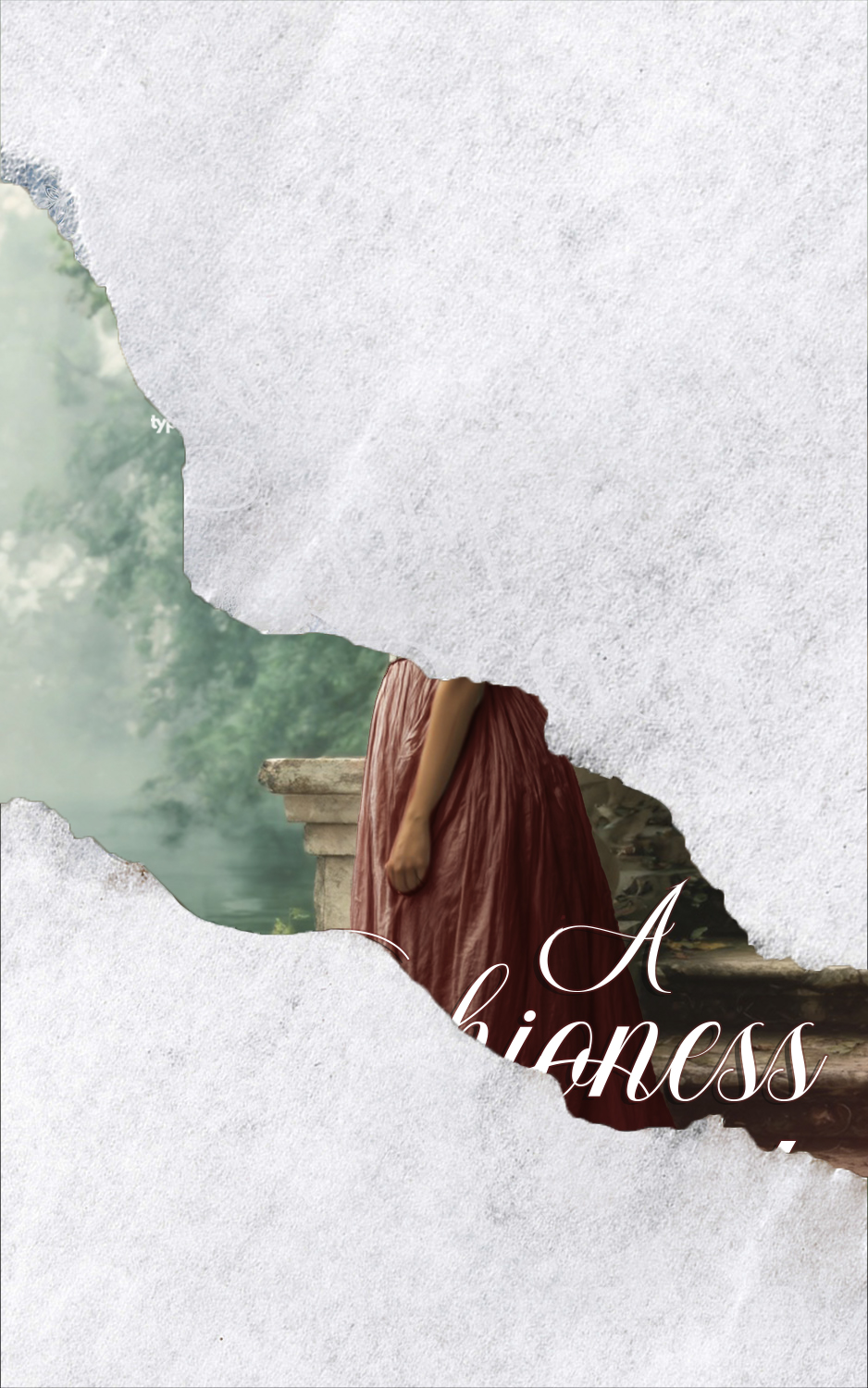
Chapter One
The grey wagtail’s tail had been working at impossible angles for the better part of ten minutes before Arabella heard the hoofbeats.
She did not look up at first. It was easy, beside a Derbyshire stream on an unguarded afternoon, to convince oneself that horses were a feature of the landscape and not an interruption of it, and she had nearly finished the third line of the bird’s tail-spring when the hoofbeats stopped.
That, she had learned over years of fieldwork, was the sound that mattered. A horse passing through is one thing. A horse halted on a path is another.
She raised her eyes.
A man sat motionless on the opposite bank, perhaps thirty feet of clear water between them. The horse was a powerful chestnut. The man was broader through the shoulders than he was tall, and they had the matched composure of two creatures who had stood together in difficult places. His dark hair was longer than fashion approved of, ruffled by the breeze coming off the water. His features were harsh and angular, weathered in a way that suggested long campaigns rather than country air, with a thin pale scar running along the line of his jaw.
He was watching her.
Not threatening, not curious in any simple way but arrested. As though her presence beside the stream had disrupted some calculation he had not known he was making.
She did not look away. She was not afraid, and she saw no reason to pretend otherwise. He was a man on a horse at a respectable distance on a fine afternoon, and she had spent enough of her twenty-four years being told what to be afraid of to know when fear was being suggested rather than required.
So, she did the only natural thing available to her, and offered him a small, polite nod of acknowledgement.
Something moved across his face. Surprise, certainly, and then something harder and more guarded, closing over it like a shutter drawn across a window. He held her gaze for one long, charged moment. Then he wheeled the chestnut sharply and rode back into the trees at a speed that left no ambiguity about his intentions.
Arabella watched the place where he had been until the last sound of hoofbeats faded into the wood.
She knew who he was. Everyone in Derbyshire knew. Mrs Fletcher had told them in the first hour of their arrival at Meadowbrook Cottage that morning, with the particular relish people reserve for unpleasant news they have been waiting to deliver: the mad marquess of Alendale Manor, returned from the Peninsular War six months past with a leg that no longer worked properly and a mind, the village said, that did not work at all. The nightmares were something dreadful. He refused all callers, the tenants kept their distance and crossed streets to avoid him, and Mrs Fletcher had advised, in the tone of a woman discharging an obligation, that the Misses Thorne would do well to keep clear of the manor grounds.
Arabella had nodded politely and made no promises she did not intend to keep.
Not mad, she thought now, looking at the empty bank. Not frightening. Merely startled, perhaps, by the unprecedented experience of a smile offered without fear or calculation attached to it.
A kingfisher shot past downstream in a streak of impossible blue, landed on a branch barely six feet away, and regarded her with one bright, skeptical eye. She reached automatically for her pencil. The wagtail had vanished while she was looking elsewhere, and a kingfisher at six feet was a gift she could not afford to waste.
It was only when she looked down at the page some minutes later that she realised she had not drawn the kingfisher at all.
The figure on the opposite bank stared up at her from the paper with a fidelity that did not bear examining. The set of broad shoulders. The military stillness in the saddle. The harsh profile turned toward the trees. She had drawn him without deciding to, without permission from her better judgment, and her hand had given him a quality of solitude so complete it was almost painful to examine.
She closed the sketchbook with rather more force than was strictly necessary.
I am four and twenty, she told herself firmly, and a confirmed spinster these three winters running. I am entirely past the age for the particular variety of nonsense currently threatening to take up residence in my chest.
It was the kind of thing one said to oneself when one knew it to be both true and entirely insufficient.
She gathered her things, folded her shawl over her arm, and turned back through the field toward Meadowbrook Cottage with a brisk, practical step that was undermined by the fact that her hand kept finding the edge of the sketchbook through the cloth of her bag, as though to assure itself that what she had drawn was still inside it.
***
The song thrush was still at work in the hedgerow when she came up the lane.
She paused at the garden gate to listen. Four clear notes, repeated with the particular insistence of a bird unconcerned with its audience. After the long months of London, of hushed voices in narrow hallways, of remedies that never quite worked, of sitting vigil beside a bed that grew emptier by degrees, four notes from a thrush were a small, private gift, and she let them have the moment she had not given them at sunrise.
The garden at Meadowbrook Cottage had been left largely to its own devices for some years and had made the most of the liberty. Roses scrambled uninvited over the stone wall. A bank of ox-eye daisies had colonised what might once have been a kitchen bed. The grass wanted cutting, the path wanted edging, and none of it mattered in the least, because beyond the gate the Derbyshire countryside stretched in every direction under a sky of such uncomplicated blue that something in Arabella’s chest, very quietly, refused to settle.
She had walked back from the stream telling herself the encounter had been nothing. She told herself again, now, with the gate latched behind her.
It was not working any better here than it had on the path.
“There are seventeen kinds of wildflower in that bank alone,” said Phoebe from the cottage doorway, her voice carrying the bright, relentless optimism of a girl who had not yet been seriously disappointed by anything. “I counted. Is it not extraordinary?”
“Mind the nettles along the lower wall,” Arabella said.
Phoebe descended the steps with the light-footed grace that had always made her seem to float slightly above ordinary concerns. She was prettier than Arabella, fairer, with none of the inconvenient auburn curls that refused all instruction, and she regarded Derbyshire with the same enthusiasm she brought to everything. According to Arabella, it was considerable, and occasionally exhausting.
“Was the stream as Mrs Fletcher promised?”
“It was.”
“And the birds?”
Arabella shifted the bag a little against her hip. “Adequate.”
“Adequate,” Phoebe repeated, with the careful neutrality of a younger sister who had spent twenty-two years learning to read the elder. “That is a remarkable verdict from a woman who came home from Yorkshire last summer composing odes to a marsh harrier.”
“It was a fine stream. The wagtail was uncooperative.”
“The wagtail,” said Phoebe, “is not what is troubling you.”
Arabella looked at her sister with the particular weariness of a woman who had been read accurately and did not propose to confirm it. “Mrs Fletcher promised tea,” she said. “Shall we discover whether her promises are reliable?”
Phoebe linked her arm through hers with the easy assumption that the conversation would continue at some later hour of her choosing. They walked together toward the garden bench, where Mrs Fletcher had already appeared with a tray, moving with the unhurried authority of a woman who had managed a household for thirty years and saw no reason to alter her methods now. She was broad and capable, with sharp eyes that had already catalogued the Thorne family comprehensively and reached their own conclusions.
“Tea on the bench, I thought, miss,” she said, setting the tray down. “The afternoon being what it is.”
“Thank you, Mrs Fletcher. You are very good.”
Arabella poured while Phoebe examined a teacake with the critical attention she generally reserved for matters of greater consequence. Through a gap in the trees to the north, the upper storeys of a large house were just visible against the blue sky; dark stone and broken chimneys, too imposing to be entirely comfortable.
“That is Alendale Manor, I believe.”
Mrs Fletcher, who had been arranging cups, paused almost imperceptibly.
“It is, miss.”
“You spoke of the marquess this morning.”
“I did, miss.” She settled the milk jug with rather more precision than it required. “Lord Alendale. Returned from the Peninsula some six months past. Served with the cavalry; a major, he was, and by all accounts greatly respected by his men.” There was a pause. “He came back changed.”
Phoebe looked up from her teacake. “Changed how?”
“The nightmares are terrible.” Mrs Fletcher lowered her voice with the instinct of someone who had been waiting to deliver this particular intelligence a second time and was prepared to do it justice. “The shouts in the night are something dreadful. He refuses all callers, he has not left the estate in months, and the tenants keep their distance, as I have already told you.” She paused again. “They call him the mad marquess in the village, begging your pardon, miss, though I don’t say it myself.”
Phoebe drew a sharp breath and clutched Arabella’s arm. “We are to live next to a madman?”
“We are to live next to a wounded man,” Arabella said mildly. “Which is rather a different thing.”
Mrs Fletcher’s expression shifted, and they could see the relish fading, replaced by something more honest. “He was not always like this, mind you. Before the war, Lord Alendale was the kind of man tenants would speak well of, and not merely out of obligation. He always had a word for people, knew their names, their families, and he was generous when there was hardship.” She paused, something almost mournful crossing her broad face. “The young ladies of the neighbourhood were very much in hope of him, once.”
“What happened?” Arabella asked, though she half-knew the answer already.
“Something terrible at a battle, miss. Salamanca, they say. He came back with his leg in a bad way and his mind in a worse one. What precisely occurred, nobody knows, because he does not speak of it.”
Arabella nodded slowly. She said nothing more, but something settled in her chest. Not fear, not precisely pity, but something closer to recognition. She understood, rather well, what it meant to carry a wound that did not show.
She thought of a horse halted on the opposite bank and a man whose face had closed against an offered nod the way a shutter closes against light, and she found she could not look at Mrs Fletcher for a moment.
“Best to keep clear of the manor grounds,” Mrs Fletcher added, in the tone of a woman who had done her duty and washed her hands of the consequences. “He does ride out some mornings. If you should encounter him…”
“I shall be perfectly civil,” Arabella said.
“Yes, miss.” Mrs Fletcher collected the tray and seemed unsurprised.
She withdrew toward the house with the unhurried air of someone who had said what she intended to say and would, in the fullness of time, be proven correct on at least one point of it.
Phoebe waited until she was out of earshot.
“Arabella.”
“Mm.”
“You have not touched your tea.”
She looked down. The cup sat untouched on the bench beside her, the milk already separating in a faint pale film on the surface, and she had no memory of having poured it.
“I was thinking,” she said.
“Yes,” said Phoebe. “I had observed that.”
***
Supper at Meadowbrook Cottage was a simple affair: cold mutton, bread that Mrs Fletcher produced with the efficiency that characterised her every action, and Herodotus propped open against the salt cellar. Geoffrey Thorne ate without appearing to register what was before him, his attention divided between his plate and the ancient Greek with the practiced ease of a man who had long since learned to manage both simultaneously.
“I saw him,” Phoebe announced, helping herself to bread with the air of someone about to bestow important news. “Through the garden gate this afternoon, riding along the far field. Just a glimpse.” She arranged her expression into something satisfyingly ominous. “He looked enormous. And rather terrifying.”
“Did he?” Arabella asked, with the studied indifference of a woman who had seen rather more of him than that and had no intention of mentioning the details. “I think I saw him as well.”
“All dark and glowering.” Phoebe sighed with transparent pleasure. “Like something from a Gothic book.”
Arabella turned her cup in her hands. “He looked to me,” she said carefully, “rather lonely.”
Phoebe considered this with genuine thought, because she was more perceptive than she generally let on. “I suppose a person can be both.”
“A great many people are.”
Their father surfaced from Herodotus with the expression of a man emerging from considerable depth. “The Marquess of Alendale had an excellent reputation before the war. I recall the name spoken of very favourably; a man of honour and genuine feeling, by all accounts.” He looked at Arabella with brief, unusual focus. “A great pity what the Peninsula does to fine young men.”
He returned to Herodotus.
Phoebe watched him go with the fond exasperation of long habit, then turned back to her sister.
“You are not the least afraid of him, are you? Not even a little?”
“No.”
“You are remarkable,” Phoebe declared. “I should have run immediately. I very nearly did, and I only glimpsed him from forty yards across a field.”
“You would not have run,” Arabella said. “You are braver than you believe yourself to be.”
Phoebe looked pleased, if unconvinced. She began to speak of the village, of Mrs Potter’s shop, of the possibilities for society in so small a place, and Arabella listened and contributed where it was wanted. It was the comfortable, ordinary conversation of an ordinary evening. There was real comfort in it: in smallness, in the warmth of a single candle, in her sister’s voice filling the silence.
***
Later, in her small room, Arabella sat at the narrow writing desk by the window and opened her sketchbook by the light of a candle she could not really spare.
She had intended to finish the grey wagtail. The sketch was good; the pose was captured with some accuracy, and the tail-position was true to life. She needed only to add the distinctive yellow beneath the breast, and the drawing would be complete.
But she did not turn to the wagtail.
She turned to the opposite page instead.
He was still there, of course. The set of broad shoulders. The military stillness in the saddle. The suggestion of a harsh profile turned against the dark tree line. She had thought, walking home, that the act of closing the sketchbook had somehow contained him, but he was there exactly as she had left him: a man on a horse at the edge of a wood, belonging there, and entirely alone.
She traced one finger along the edge of the page without quite touching the figure.
Twenty-four years old and a confirmed spinster. That was what Mrs Hargreaves had declared last winter, with the particular satisfaction people reserve for unpleasant predictions proven correct, and Arabella had not disputed it. She had spent the years of her come-out at her mother’s bedside rather than in a ballroom, and the few suitors who had called had not proved tenacious. A woman who declined evening gatherings to prepare poultices, who could not be reliably present at the sort of gathering where attachments are formed and futures decided — such a woman did not inspire proposals. She had made her peace with it.
Mostly.
She had not, in some time, allowed herself to examine the word mostly. There had been no use for it: a sister’s invitation now and again, a thrush in the garden, a sketchbook full of birds. These were ample. These were what a woman like her was entitled to want, and she had wanted them, and they had sufficed.
She closed the sketchbook firmly and put out the candle.
It did no good. In the dark she could still see the figure on the page: the broad shoulders, the military stillness, and beneath them, less easily looked at, the quality of solitude her hand had given him without her permission. She had recognised it because she knew it. She had drawn it because she had seen it not across a stream but from the inside, from her own corner of every room she had stood quietly in for the last seven years.
Tomorrow, she told herself, I shall be sensible. I shall walk to the village. I shall sketch the church tower, and I shall not return to the stream.
She lay in the dark of her small room at Meadowbrook Cottage and listened to the song thrush in the hedgerow finishing his last performance of the evening, and she did not believe a single word of it.
Chapter Two
The song thrush announced itself from somewhere deep in the hedgerow before Arabella had taken three steps into the garden, and she stopped at once, tilting her head to listen.
Four clear notes, repeated with the particular insistence of a bird unconcerned with its audience. She exhaled slowly. After the long months of London, of hushed voices in narrow hallways, of remedies that never quite worked, of sitting vigil beside a bed that grew emptier by degrees, four notes from a thrush felt like a small, private gift.
She looked about her. The garden at Meadowbrook Cottage had been left largely to its own devices for some years and had made the most of the liberty. Roses scrambled uninvited over the stone wall. A bank of ox-eye daisies had colonised what might once have been a kitchen bed. The grass wanted cutting, the path wanted edging, and none of it mattered in the least, because beyond the gate the Derbyshire countryside stretched in every direction under a sky of such uncomplicated blue that something in Arabella’s chest began, very quietly, to loosen.
Twenty-four years old and a confirmed spinster. That was what Mrs Hargreaves had declared last winter, with the particular satisfaction people reserve for unpleasant predictions proven correct. Arabella had not disputed it. She had spent the years of her come-out at her mother’s bedside rather than in a ballroom, and the few suitors who had called had not proved tenacious. A woman who declined evening gatherings to prepare poultices, who could not be reliably present at the sort of gathering where attachments are formed and futures decided, such a woman did not inspire proposals. She had made her peace with it.
Mostly.
“There are seventeen kinds of wildflower in that bank alone,” said Phoebe from the cottage doorway, her voice carrying the bright, relentless optimism of a girl who has not yet been seriously disappointed by anything. “I counted. Is it not extraordinary?”
“Mind the nettles along the lower wall,” Arabella said.
Phoebe descended the steps with the light-footed grace that had always made her seem to float slightly above ordinary concerns. She was prettier than Arabella, fairer, with none of the inconvenient auburn curls that refused all instruction, and she regarded Derbyshire with the same enthusiasm she brought to everything. According to Arabella, it was considerable, and occasionally exhausting.
“Mrs Fletcher says there is a stream,” Phoebe announced. “Just through the back field. She says the birds, along it, are wonderful.”
“Then I shall go this afternoon.”
“With your sketchbook, I suppose.”
“Naturally.”
Phoebe linked her arm through her sister’s, and they stood together looking out over the tumbled garden. In the distance, through a gap in the trees to the north, the upper storeys of a large house were just visible; dark stone and broken chimneys against the blue sky, too imposing to be entirely comfortable.
The back door opened, and Mrs Fletcher appeared with a tea tray, moving with the unhurried authority of a woman who has managed a household for thirty years and sees no reason to alter her methods now. She was broad and capable, with sharp eyes that had already catalogued the Thorne family comprehensively and reached their own conclusions.
“Tea on the garden bench, I thought, miss,” she said, setting the tray down. “The afternoon being what it is.”
“Thank you, Mrs Fletcher. You are very good.” Arabella poured while Phoebe examined a teacake with the critical attention she generally reserved for matters of greater consequence. “Tell me, Mrs Fletcher, about that house through the trees. Is that Alendale Manor?”
Mrs Fletcher, who had been arranging cups, paused almost imperceptibly.
“It is, miss.”
“And the family?”
“There is only the marquess now.” She settled the milk jug with rather more precision than it required. “Lord Alendale. He returned from the Peninsula some six months past. Served with the cavalry; a major, he was, and by all accounts greatly respected by his men.” There was a pause. “He came back changed.”
Phoebe looked up from her teacake. “Changed how?”
“The nightmares are terrible.” Mrs Fletcher lowered her voice with the instinct of someone who has been waiting to deliver this particular intelligence. “The shouts in the night are something dreadful. He refuses all callers, he hasn’t left the estate in months, and the tenants keep their distance.” She paused again. “They call him the mad marquess in the village, begging your pardon, miss, though I don’t say it myself.”
Phoebe drew a sharp breath and clutched Arabella’s arm. “We are to live next to a madman?”
“We are to live next to a wounded man,” Arabella said mildly. “Which is rather a different thing.”
Mrs Fletcher’s expression shifted, and they could see the relish fading, replaced by something more honest. “He wasn’t always like this, mind you. Before the war, Lord Alendale was the kind of man tenants would speak well of, and not merely out of obligation. He always had a word for people, knew their names, their families, and he was generous when there was hardship.”Then there was a brief pause, something almost mournful crossing her broad face. “The young ladies of the neighbourhood were very much in hope of him, once.”
“What happened?” Arabella asked.
“Something terrible at a battle, miss. Salamanca, they say. He came back with his leg in a bad way and his mind in a worse one. What precisely occurred, nobody knows because he doesn’t speak of it.”
Arabella nodded slowly. She said nothing more, but something settled in her chest. Not fear, and not precisely pity but something closer to recognition. She understood, rather well, what it meant to carry a wound that did not show.
“Best to keep clear of the manor grounds,” Mrs Fletcher added, in the tone of a woman who had done her duty and washed her hands of the consequences. “He does ride out some mornings. If you should encounter him…”
“I shall be perfectly civil,” Arabella said.
“Yes, miss.” Mrs Fletcher collected the tray and seemed unsurprised.
***
The stream was everything Arabella had hoped for.
She found it easily, following the sound of water through the back field and through a gap in the hedgerow where the ground sloped to a bank of mossy stones. A fallen oak lay along one side, its bark worn smooth enough to serve as a seat, and from it the view opened across perhaps thirty feet of quick, clear water to the opposite bank where the Alendale estate began properly; wilder, less managed, the trees growing close and dark.
A grey wagtail worked the rocks downstream with methodical energy, dipping and bobbing in that characteristic manner that always made her smile. She settled on the log, opened her sketchbook, and began.
This was where she was most herself. Not in drawing rooms, not at dinner tables where conversation skated across surfaces without ever pressing through to anything of substance, but here, with pencil, paper and a bird that did not know or care whether she was marriageable.
She was attempting to capture the wagtail’s perpetual tail-spring, that restless, compulsive motion that defied stillness, when she heard hoofbeats approaching on the opposite bank.
They stopped, and when she looked up, a horse stood some thirty feet away, and the man astride it was absolutely still.
Even at that distance, he commanded attention in a way that had nothing to do with height or elegance. He was broad rather than tall, powerfully built, sitting with the kind of precision that spoke of years in a saddle. His dark hair was longer than fashion approved of, ruffled by the afternoon breeze. His features, what she could make of them from here, were harsh and angular, weathered in a way that suggested long campaigns rather than country air, with a thin pale scar running along the line of his jaw. He was watching her with an expression she could not quite read; not threatening, not curious in any simple way. Arrested, perhaps. As though her presence had disrupted some calculation he had not known he was making.
She did not look away. She was not afraid, and she saw no reason to pretend otherwise. He was a man on a horse at a respectable distance on a fine afternoon. There was nothing here to fear.
So, she did the only natural thing available to her, and offered him a small, polite nod of acknowledgement.
Something moved across his face. Surprise, certainly and then something harder and more guarded, closing over it like a shutter drawn across a window. He held her gaze for one long, charged moment. Then he wheeled his horse sharply and rode back into the trees at a speed that left no ambiguity about his intentions.
She watched the place where he had been until the last sound of hoofbeats faded into the wood.
Not mad, she thought. Not frightening. He was merely startled by the unprecedented experience of a smile offered without fear or calculation attached to it.
A kingfisher shot past downstream in a streak of impossible blue, landed on a branch barely six feet away, and regarded her with one bright, skeptical eye. She reached automatically for her pencil.
It was only when she looked down at the page that she realised she had not drawn the kingfisher at all.
***
Supper at Meadowbrook Cottage was a simple affair: cold mutton, bread that Mrs Fletcher produced with the efficiency that characterised her every action, and Herodotus propped open against the salt cellar. Geoffrey Thorne ate without appearing to register what was before him, his attention divided between his plate and the ancient Greek with the practiced ease of a man who has long since learned to manage both simultaneously.
“I saw him,” Phoebe announced, helping herself to bread with the air of someone about to bestow important news. “Through the garden gate this afternoon, riding along the far field. Just a glimpse.” She arranged her expression into something satisfyingly ominous. “He looked enormous. And rather terrifying.”
“Did he?” Arabella asked.
“All dark and glowering.” Phoebe sighed with transparent pleasure. “Like something from a Gothic book.”
“He looked to me,” Arabella said carefully, “rather lonely.”
Her sister considered this with genuine thought because Phoebe was more perceptive than she generally let on. “I suppose a person can be both.”
“A great many people are.”
Their father surfaced from Herodotus with the expression of a man emerging from considerable depth. “The Marquess of Alendale had an excellent reputation before the war. I recall the name spoken of very favourably; a man of honour and genuine feeling, by all accounts.” He looked at Arabella with brief, unusual focus. “A great pity what the Peninsula does to fine young men.”
He returned to Herodotus.
Phoebe watched him go with the fond exasperation of long habit, then turned back to her sister. “You are not the least afraid of him, are you? Not even a little?”
“No.”
“You are remarkable,” Phoebe declared. “I should have run immediately. I very nearly did, and I only glimpsed him from forty yards across a field.”
“You would not have run,” Arabella said. “You are braver than you believe yourself to be.”
Phoebe looked pleased, if unconvinced. She began to speak of the village, of Mrs Potter’s shop, of the possibilities for society in so small a place, and Arabella listened and contributed where it was wanted. It was the comfortable, ordinary conversation of an ordinary evening. There was real comfort in it: in smallness, in the warmth of a single candle, in her sister’s voice filling the silence.
***
Later, in her small room, Arabella opened her sketchbook by the light of a candle she could not really spare.
She had intended to finish the grey wagtail. The sketch was good; the pose was captured with some accuracy, and the tail-position was true to life. She needed only to add the distinctive yellow beneath the breast, and the drawing would be complete.
She turned instead to the opposite page.
She had not consciously drawn it. That was the unsettling part. Somewhere between the kingfisher’s arrival and her walk home through the evening field, her pencil had moved without much supervision from her better judgment, and the result was unmistakably him. The set of broad shoulders, the military stillness in the saddle, the suggestion of a harsh profile turned against the dark tree line. She had given him, without intending to, a quality of solitude so complete it was almost painful to examine.
She turned the page firmly back to the unfinished wagtail.
I am four and twenty, she told herself, and too sensible for this particular variety of nonsense.
She picked up her pencil, but her eyes drifted back.
Chapter Three
The ride back from the stream had done nothing to settle him.
Jasper had spent the better part of a mile telling himself firmly that the woman was a stranger, that he had looked at her for perhaps thirty seconds across thirty feet of water, that she was nobody to him and would remain so. The argument was entirely sound. His horse had ignored it completely, and so, it appeared, had he.
He dismounted in the stable yard with the care that his leg now required of him: the slow, deliberate transfer of weight, the moment of braced anticipation before his right foot met the ground. The dull throb he lived with daily had sharpened considerably during the ride, as it always did. He had learned not to show it. Peters said the men in the village thought him a cold man; Jasper thought it a fair trade.
“I’ll see to him, my lord.” Young Thomas appeared from the stable with commendable speed, reaching for the reins. The lad had the good sense never to look directly at the limp.
Jasper relinquished the horse and made his way toward the house.
Alendale Manor had been in his family for four generations, and in better years he had been proud of its long stone facade, the formal gardens his mother had tended, the sweep of parkland down toward the lower lake. Now he saw chiefly what wanted doing. The south terrace needed re-pointing. Three windows on the upper floor had been boarded since autumn. The drive was a disgrace. He had the means to remedy all of it, and could summon neither the will nor the concentration to begin.
One day at a time. That was what Peters said, but Jasper found the philosophy less inspiring with each passing week.
Simmons met him at the door with an apologetic expression Jasper had come to recognise; the particular compression of the butler’s lips meant something unwelcome awaited.
“Mr Vincent Ainsworth is in the parlour, my lord. He arrived approximately forty minutes ago. I informed him you were not expected back for some time, but he expressed a preference for waiting.”
“Of course he did.” Jasper handed Simmons his gloves. “Thank you, Simmons.”
The parlour faced west and caught the full afternoon light, which was perhaps why Vincent had chosen it; he always seemed most at ease with the sun behind him. He was standing at the window when Jasper entered, turning with the warm, unhurried smile of a man entirely comfortable in other people’s homes.
“Jasper.” He crossed the room and clasped Jasper’s shoulder with both hands; the gesture of a brother, easy and affectionate. “I had begun to wonder if you had ridden to London and back. How are you faring?”
“Well enough.” Jasper moved toward the chair nearest the fireplace and sat, grateful to be off his leg. “You might have sent word.”
“I was passing, and I thought — why stand on ceremony with family?” Vincent settled into the chair opposite with the fluid ease of a man who has never once had cause to think about how he sits down. His pale blue eyes moved over Jasper with an attention that was carefully framed as concern. “You look tired. The sleep still troubling you?”
“I sleep.”
“The nightmares, I mean. Peters mentioned…Well, he did not say much, you know how close he keeps his counsel, but one infers.” A pause, calibrated to suggest reluctance. “Are they any better? The dark episodes?”
“I manage perfectly well.”
“I am glad to hear it.” Vincent’s voice carried no edge, no detectable insincerity. He leaned forward slightly, forearms on his knees, the posture of a man genuinely invested in the answer. “I ask only because I worry. You have been so isolated here, Jasper; months without real company, without the sort of society that does a man good. It cannot be easy.” He paused, and when he continued, his tone was careful, almost gentle. “I happened to mention your situation to Hargreave — you remember Hargreave, the man from the Sixth who went to Bath after Badajoz. He speaks very highly of a man there, a physician of some experience with returned soldiers. I took the liberty of writing to enquire. Only to have the information, should you ever want it.”
Jasper looked at him. “You wrote on my behalf?”
“I hope you are not offended. I acted out of nothing but concern.” Vincent spread his hands with easy warmth. “Hargreave was in a very dark place after Badajoz. He is quite well now. That is all I meant by it.”
There was nothing in the words to object to. The concern was genuine in its expression, the example offered with care, the gesture framed as nothing more than one cousin thinking of another. Jasper could not have said precisely why it sat uneasily.
“You are very good.” Jasper kept his voice even. “I will not detain you further because I have estate correspondence to attend to.”
Vincent rose without protest, which was itself faintly interesting. He shook Jasper’s hand with genuine warmth, said something pleasant about the evening and the village assembly next month, and let himself be shown out by Simmons with the unhurried grace of a man who has accomplished what he came for.
Jasper sat alone in the parlour for a considerable time after the sound of hoofbeats faded down the drive.
He could not have said precisely what unsettled him about his cousin’s visits. Vincent was unfailingly kind. His concern was consistently expressed, and his affection consistent in all its forms. There was not a single moment Jasper could point to and name as false. Yet something in the air after Vincent departed always reminded him, obscurely, of the feeling that preceded an ambush, a stillness with intention behind it, a silence that was not peaceful.
He was being uncharitable. His cousin came because he cared, asked questions because he was worried, and Jasper repaid that care with suspicion born of a mind that had been looking for threats in the landscape for five years and had not yet learned to stop.
He pressed his fingers against his leg and turned his attention, with some effort, to the evening ahead.
***
Sleep came after midnight, and brought the usual company.
The screaming was always the worst of it; not his own, though he did that too, but theirs. Twenty-three voices in various registers of agony, some calling for him by name and some calling for people he had never known, mothers and wives and one boy who could not have been nineteen calling only please in a voice that had not finished breaking. The cannon fire was noise, merely noise, something the body could absorb and categorise. The voices were something else entirely.
He came awake with a lurch, sheets twisted around him, sweat cold against his skin. For the first several seconds he could not have sworn he was in England. The darkness of his room looked no different from the darkness of that July field, and his leg was screaming with the same vicious insistence it had on the night his horse went down. For a long disorienting moment Salamanca was not a memory but a present fact.
Then the coals in the grate shifted, and he heard the familiar creak of the floorboard outside his door.
Peters appeared with a candle, his weathered face creased into the particular expression of a man who had done this often enough to have made his peace with it — neither alarmed, nor pitying, simply present.
Jasper made a single sharp gesture. Peters held his gaze for a moment, then withdrew without a word and pulled the door quietly closed behind him.
The shame was its own separate thing from the terror, and in some ways worse. He had led men. He had steadied raw recruits on the morning of their first engagement, had ridden at the front and kept his voice level while the world came apart around him. He had been, by any reasonable account, a capable officer. And now he woke screaming in a dark bedroom in Derbyshire because the silence was too loud.
He sat on the edge of the bed and pressed the heels of his hands against his eyes until the darkness behind them was simply darkness and nothing more.
He sat with the quiet for a long while. The usual thoughts came in their usual order: the names, the faces, the particular arithmetic of survival that never resolved in his favour no matter how many times he worked through it. Twenty-three men dead and one man sitting on the edge of a bed in the small hours, unable to justify the arithmetic.
And then, without invitation and without the decency to announce itself, a totally different image arrived.
Auburn hair catching the afternoon light. Jade green eyes that held neither fear nor pity nor any of the careful, managed expressions he was accustomed to receiving. Just attention. Simple, steady, human attention, offered across thirty feet of water as though it cost nothing, as though he were an ordinary man on an ordinary afternoon.
She looked at me as if I were simply a man.
He could not remember the last time anyone had done that. He was not sure anyone ever had, not since the war. Not even his mother, who loved him fiercely and could not conceal her worry, and whose eyes, when they rested on him, always carried the shadow of what she feared losing.
This woman had looked at him with nothing of the sort.
He rose from the bed, crossed to the window with his uneven gait, and looked out at the grounds dissolving in darkness below. Somewhere out there, beyond the tree line, beyond the stream that marked his boundary, she was asleep in a cottage. He had frightened her, no doubt because he frightened everyone eventually, and he had done nothing to prevent it this time, wheeling his horse and retreating like a man who could not bear to be looked at kindly.
Dangerous, he told himself. Stay away from her.

2 Comments
The 2nd chapter is a duplicate of the 1st chapter. I cannot renderan adequate review of just 2 chapters at this point.
This looks like an interesting opportunity for 2 people who don’t expect to ever marry find each other and a relationship neither ever expected. I look forward to seeing how the story progresses.